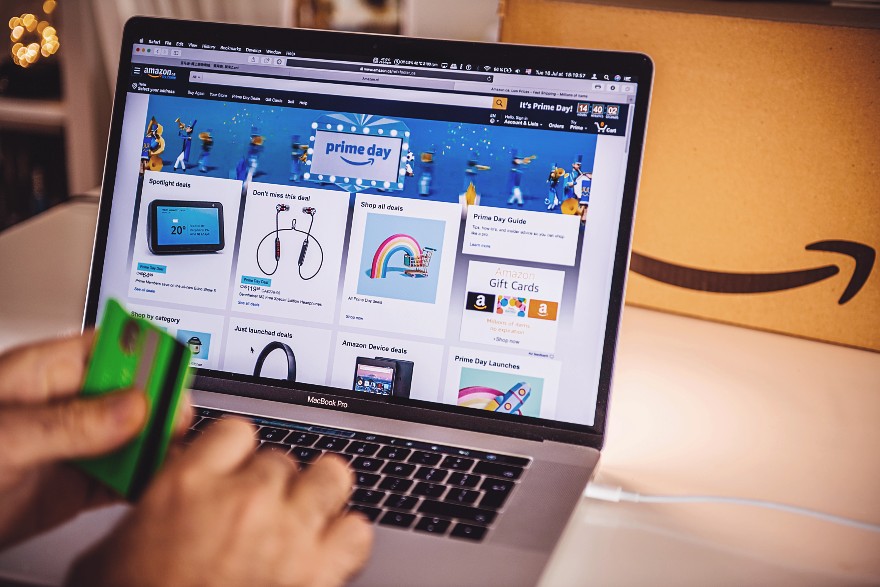
Amazon dominates the ecommerce market with over 300 million active users. Amazon has also become the de-facto product search engine – so much so that close to 75% of all USA consumers begin their product search journey on the Amazon.com marketplace.
So, it is no wonder that Amazon Advertising (formerly Amazon Marketing Services) is becoming an increasingly valuable tool for businesses of all sizes. A testimony to its popularity, Amazon Advertising generated a staggering £23 billion ($31 billion) in revenue in 2021 as brands vied to increase their visibility, product awareness, and sales.
Using Amazon Advertising, brands can promote their products through a plethora of sponsored campaign options – to gain visibility, brand awareness, and sales; and to make their product offerings stand out among their competitors.
However, for the uninitiated, Amazon Advertising can be very complicated and ever-changing. Therefore, companies must stay on top of the latest changes and develop winning Amazon advertising strategies for their business.
Read on for our introduction to Amazon Advertising.
Amazon Advertising: Types of Ads
The basic concept of Amazon Advertising is to increase visibility and sales on Amazon.

Here is a quick rundown on the native Amazon advertising tools and options that are available to jumpstart any marketing campaign.
- Sponsored Products: Such ads appear in shopping results and product detail pages as self-service ads.
- Sponsored Brands: This is a self-service way to advertise brands in shopping results, offering a custom headline, brand logo, and multiple product options.
- Sponsored Display: These self-service ads are designed based on Amazon shopping interests and automatically generate and target relevant audiences.
- Audio ads: Alexa-enabled devices, such as Echo and Fire TV, as well as mobile and desktop, play these ads on Amazon Music’s free tier.
- Video ads: Video ads appear outside of video content, both on and off Amazon. The streaming TV ads appear on connected TV sets, channels, and networks. In addition, IMDb TV ads appear outside of video content.
- Custom advertisements: Amazon Ads account executives design these bespoke ads
- Amazon DSP: Amazon’s demand-side platform enables programmatic buying of the display, video, and audio ads.
- Amazon Attribution: It measures how non-Amazon marketing drives results on Amazon.

Tips for successfully setting up Amazon ads
Many factors go into successful Amazon advertising. First, of course, Keyword research helps identify winning keywords people use when looking for products. Based on this, marketers can create an optimized campaign to put things into action.
- KEYWORD RESEARCH: Identify the right keywords to target the customers. Maintain a Search term catalog based on current trends, own branded search terms, and competitor analysis.
- BIDDING: Use amazon’s bidding system to get maximum returns on investment.
- Automated campaigns use product-level bids and Amazon’s algorithm to match advertisers with customers.
- Manual campaigns provide more control as it allows advertisers to specify a bid for each keyword, competitor product, or keyword.
- AD CREATIVES: Develop ad copy and images that stand out from the competition. Focus on A+ brand content and focus on Reviews and Reviews to drive growth.
- REPORTING, ANALYTICS: Closely monitor the Amazon advertising campaigns to optimize results. And perform course correction and benchmarking as needed.
KPIs to focus on while advertising on Amazon
- CTR (Click Through Rate)
- ACoS (advertising cost of sales)
- TACoS (total advertising cost of sales)
- ROaS – Return on Advertising Spend
- Search impressions
- Conversion rate
- CPC – Cost per Click
We often get caught up in a variety of shiny new metrics that marketers love but let us not forget classics like click-through rate (CTR).
A low CTR means that ads are not compelling enough for people who see them–and this could be leading companies down an unwanted advertising path!
CTR remains the single most important KPI for most marketers while measuring ad effectiveness. The Click-through rate (CTR) is calculated by dividing an advertisement’s clicks by impressions. For example, if an ad campaign gets 100 clicks for every 1000 impressions, the CTR will be 100/1000, i.e., 10%.
When an ad does not successfully engage the buyer, it needs to be further optimized, or we should fix any lingering listing issues on the product detail page.
For example, a low click-through rate means buyers are not finding what they want, so keyword targeting will be essential to see how great of an offer it is on Amazon.
A few of the essential listing quality factors that affect Amazon CTR include:
- Main image quality
- Title quality
- Number of reviews
- Review score
- Fulfillment method (FBA or FBM)
- Pricing
- Ad Positioning
- Conversion Rate
- Earn A Best-Seller Badge
Factors like A+ brand content, SEO optimization, reviews, and ratings are crucial factors – and when they are optimized, Amazon ads tend to perform better. In addition, the higher a product ranks, the more effective the ad campaign becomes— saving money and driving sales.
Remember that the first step to success at Amazon is creating a helpful product page. Also, a general keyword, such as “shampoo” will not work as effectively as a specific one like “shampoo for men.”
However, the more detailed the keyword is, the higher the eventual search rank, CTR, and conversion rate.
Amazon Ads vs. Google Ads
Although every customer journey will differ from one brand to another, they are mostly made up of the following five stages: Awareness, Consideration, Retention, Decision, and Advocacy.
- AMAZON: When someone searches Amazon, they are more likely to be at the end of their buyer’s journey (i.e., close enough on a buying decision). This means that people who buy from Amazon already know what they want and need to find out whether any good deals are available!
- GOOGLE: With Google, search queries cover diverse topics – covering all stages of a buyer’s journey. As a result, the ad campaign strategy on Google can be much more flexible, targeting buyers at earlier stages of their journey. Nevertheless, not every buyer in the early part of the buyer’s journey will be ready to buy in the near future (if at all).
Amazon is, therefore, a good (and perhaps optimal) advertisement tool for product-based companies because they can skip the initial stages and directly get in front of interested shoppers.
Summary
So what does this mean for ecommerce marketers?
First, Amazon advertising should be a top priority. By not utilizing Amazon’s advertising platform, marketers are missing one of the world’s largest marketplaces.
And by not being up to date on the latest changes and strategies, they are putting their brands at a disadvantage against competitors.